

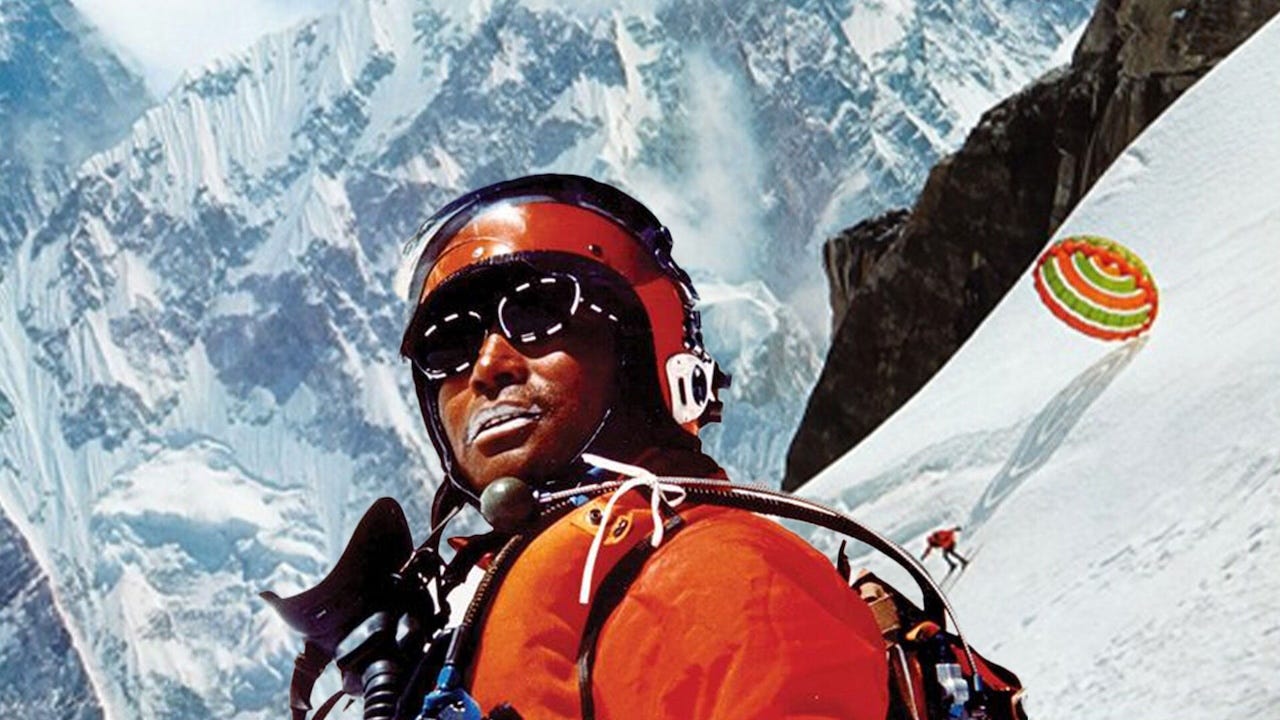
For our latest column on Oscar-winning documentaries, we’re skipping ahead 30 years to the film honored in 1976: The Man Who Skied Down Everest. The jump forward is appropriate given this week’s theatrical release of Everest: The Other Side, which features another man skiing down a different part of the mountain. But we’re not totally ignoring the chronological plan because this column does also circle back to the ceremonies next in line as we acknowledge the Academy Awards’ longtime interest in adventure-driven documentaries.
If Everest: The Other Side is nominated next year, the recognition will continue an Oscar tradition as notable as the trends toward awarding Holocaust documentaries, World War II propaganda, artist profiles, nature films, labor stories, and issue-driven advocacy works. Adventure, exploration, and athletic achievements have been a staple of documentary film since the dawn of cinema. Races and matches of all kinds were spotlighted, while early portable cameras became a common accessory in expeditions to anywhere that man could venture. Film was immediately used as a way to record feats never before attempted by anyone, let alone seen by audiences everywhere.
The first documentary to win an Academy Award, With Byrd at the South Pole, fit this tradition. As did two of the “novelty” nonfiction shorts that won Oscars before documentaries got their own category: Wrestling Swordfish and Wings Over Everest. Other winners over the years have documented trips up mountains, across oceans, beneath the seas, through canyons, jungles, and Arctic and Antarctic terrain, and even to the Moon. They’ve depicted record-breaking endeavors and death-defying exploits, such as walking a high-wire between the Twin Towers of the World Trade Center. Most recently, Jimmy Chin and Elizabeth Chai Vasarhelyi, the directors of Everest: The Other Side, deservedly won the Oscar for Best Documentary Feature with Free Solo, a film depicting a historic rope-free climb that was thought to be impossible.
Almost 50 years earlier, Yuichiro Miura conquered another first by pioneering the idea of skiing on Mount Everest. Not to be confused with much later achievements by Davo Karničar or Jim Morrison — the latter the main subject of Everest: The Other Side, as the first person to ski the more dangerous North Face of the mountain. Miura tackled the South Col, accompanied by a team including several film technicians and the cinematographer Mitsuji Kanau. While we celebrate the cinematography of today that at least can depend on the ease and accessibility of GoPros, drones, and other modern advancements in mobile filmmaking, Kanau and the other cameramen on board Miura’s mission had to manage with the larger, heavier equipment of the time to capture the adventure and sport of it all in gorgeous CinemaScope.
