
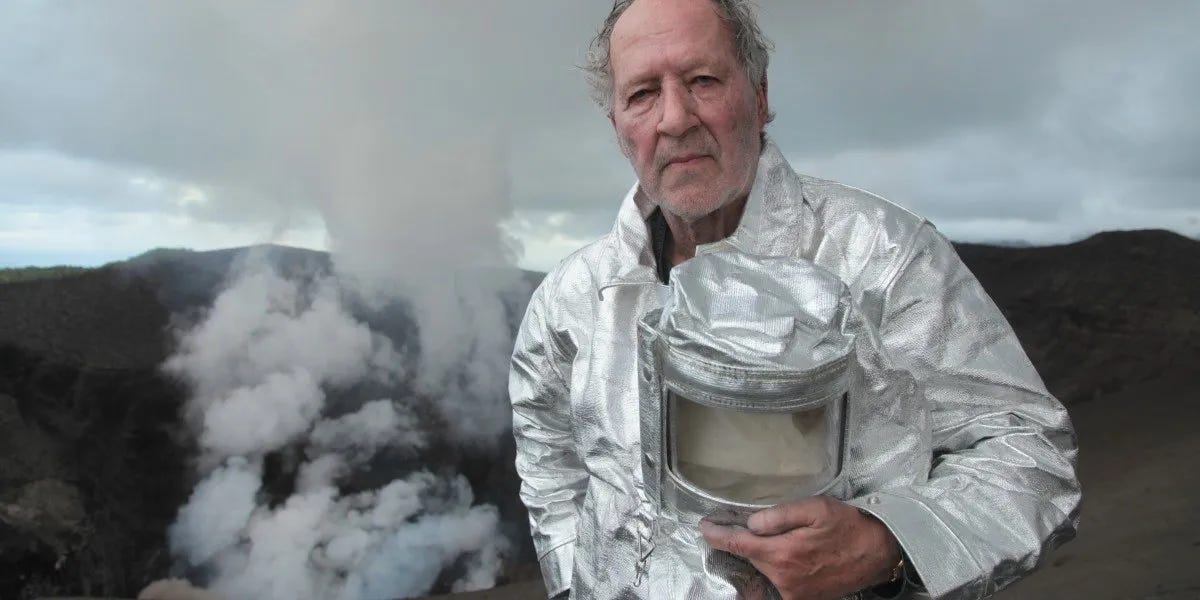
Werner Herzog is a name well known in the cinemasphere. From Aguirre, the Wrath of God to Nosferatu the Vampyre, his fictional films are critically acclaimed and original in nearly every aspect. But it’s with his documentaries that Herzog truly earns most of his acclaim. As an artist, he is a man of many talents, but his tenacity for capturing the human experience at the farthest reaches of the known world is second to none.
Herzog is a filmmaker obsessed with experience — if he films in the jungle, then he truly films in the jungle. Brilliance or hubris, it is hard to decide, but his filmmaking struggles are the stuff of legend. Just read his journal Conquest of the Useless: Reflections from the Making of Fitzcarraldo or watch Les Blank‘s brilliant Burden of Dreams, in which we see Herzog at his most broken on the notoriously grueling location shoot for Fitzcarraldo. Experience and tangibility are everything to Herzog; he is as obsessed with the image as with the intangible essence of the image.
From loneliness in the Antarctic to finding kinship among grizzly bears, here are all of Werner Herzog’s documentaries* ranked (*presently Herzog’s Theatre of Thought is unavailable to us and therefore not yet included in this list):
42. Nomad: In The Footsteps Of Bruce Chatwin (2019)
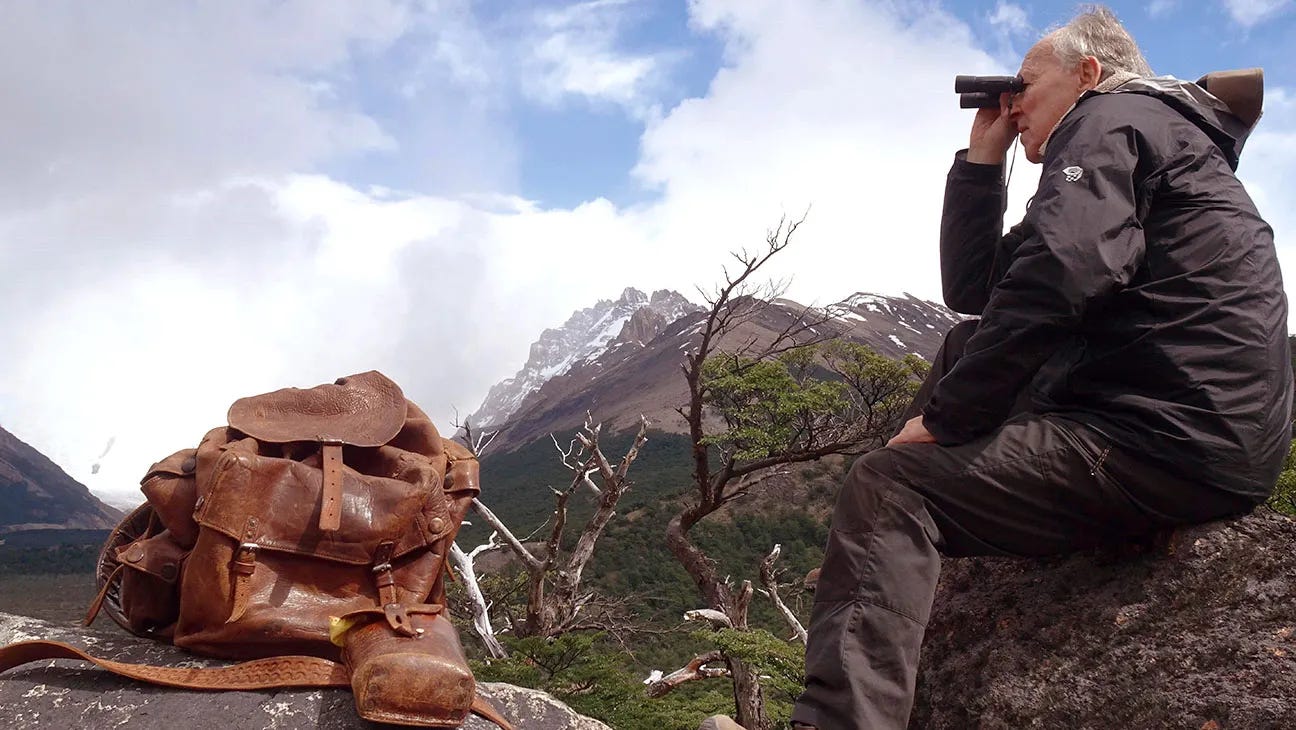
Perhaps Herzog's becoming such an institution has hurt his ability to make objective biographical documentaries. Interestingly, Nomad: In the Footsteps of Bruce Chatwin is technically a very personal film for the director. It’s about his old friend, the writer Bruce Chatwin, who died 30 years before the making of the documentary, but it’s as different as can be from his more notable feature on his relationship with Klaus Kinski, My Best Fiend. It also, despite Herzog’s narration and his appearances on screen in some rather clumsily shot scenes, feels made at a distance from the subject. He’s maybe too close to the subject to properly acquaint the audience with him. Nomad is disappointingly Herzog’s least memorable documentary. - CC
41. La Soufrière (1977)
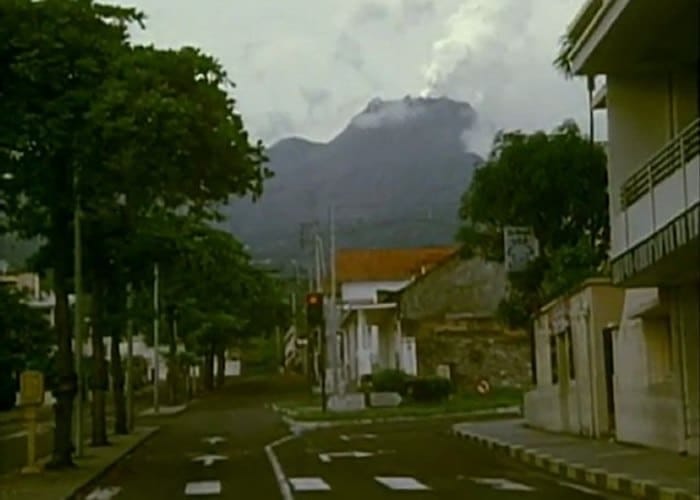
In the short documentary La Soufrière, Herzog visits the island of Guadeloupe, which has just been evacuated due to an imminent volcanic eruption. He finds three men remaining on the island, and in his interactions with them, the sublime quality that Herzog always seeks to conjure uncomfortably comes to life. The three men are content with death by immolation from the volcano, and Herzog seeks to understand their perspective. Their stories, along with the looming disaster, ground the film in a steep melancholy, and Herzog’s imagery highlights the sheer force of nature and just how unimportant humankind is at the whims of higher powers. - CH
40. Lo And Behold, Reveries Of The Connected World (2016)

Ah yes, the documentary in which Herzog meets the internet — let the memes begin. Levity aside, Lo and Behold, Reveries of the Connected World is a somber and introspective look at the interconnective nature of the global digital sprawl. Herzog narrates the film with his usual melancholic eloquence, and learning about the history of the internet is pretty compelling. The interviews with modern tech giants and other creators are less interesting. Of course, Herzog finds his way to artificial intelligence and eventually asks, “Can the internet dream of itself?” - CH
39. Handicapped Future (1971)

This documentary sees Herzog turning his existential gaze on physically disabled children in Munich, Germany. Handicapped Future was made in order to raise awareness throughout the country at the behest of one of Herzog’s disabled friends. For a Werner Herzog documentary, it is shockingly conventional and handles the subject with genuine sensitivity. It never feels exploitative, just shows life for what it is: sometimes unfair, sometimes joyous. And it highlights the fact that empathy is necessary in order to fulfill every condition of the human experience. - CH
38. The Flying Doctors Of East Africa (1969)
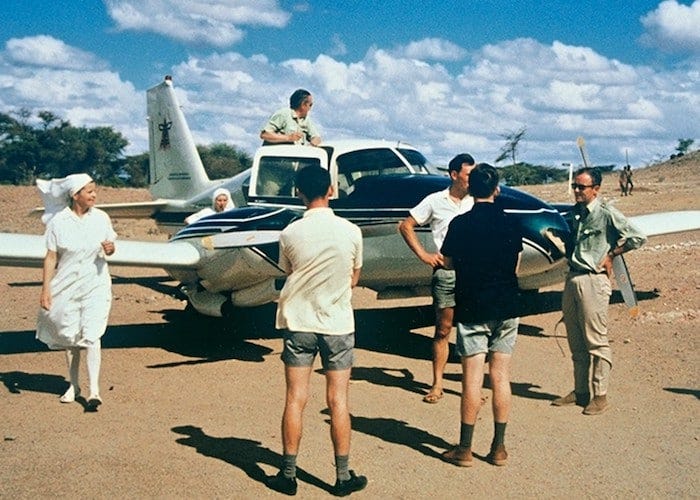
The Flying Doctors of East Africa is also quite conventional in both structure and execution. It is wholly unstylistic, and this works well for the type of film that Herzog has made. It is a dense and informative documentary that recounts, through interviews, the stories of many in the “flying doctor” arm of the African Medical and Research Foundation. Herzog has even gone on record saying that it is more of a report than it is a film, and that rings fairly true. The stories themselves, ranging from locations in Nairobi, Kenya, and Tanzania, are told with little flair — these stories do not require it. They are grueling at times and hopeful on occasion. - CH
37. Christ And Demons In New Spain (1999)
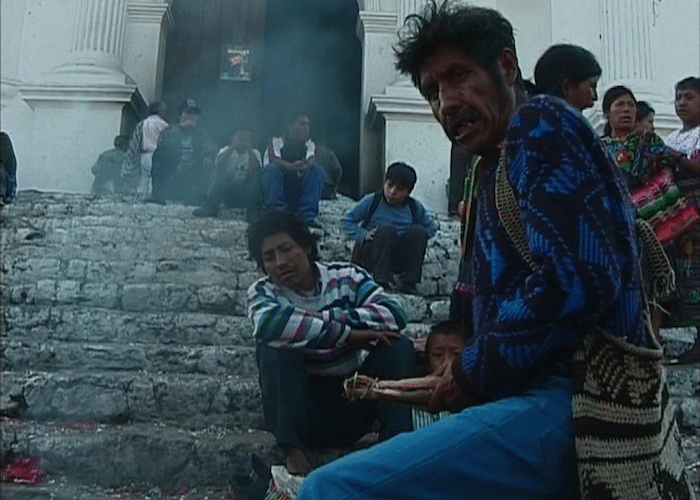
Sparse is a term I often use when describing this short documentary to friends. Visually, it is far from desolate. Every frame is packed to the brim with subtext, but as an entire work, it is thin. Christ and Demons in New Spain is the most televisual of all of Herzog’s documentaries, as it was co-opted into the German TV series 2000 Years of Christianity. Thus, it is quite jarring. Herzog’s visuals tell the story of Christian expansion and conversion, colonialism, post-colonial structures, and the ethics of the church. But the narration is done by a third party to tie the piece into the other program. So, as Herzog’s imagery tells its own tale, his meaning becomes obfuscated by a drab and tedious voiceover that feels akin to a third-rate History Channel special. - CH
36. How Much Wood Would A Woodchuck Chuck (1976)

Here we have Herzog once again traversing into the realm of the abstract. This film sees him defining the career of auctioneering as the creation of a new language. He sees the work akin to a form of poetry. How Much Wood Would a Woodchuck Chuck is a delightfully odd little film, but it asks some truly captivating questions. From the day-to-day life of auctioneering to the life of the Pennsylvania Amish, the doc wrestles with some interesting themes. But unlike some of Herzog’s later works, this one only feels skin-deep. - CH
35. The Fire Within: A Requiem For Katia And Maurice Krafft (2022)
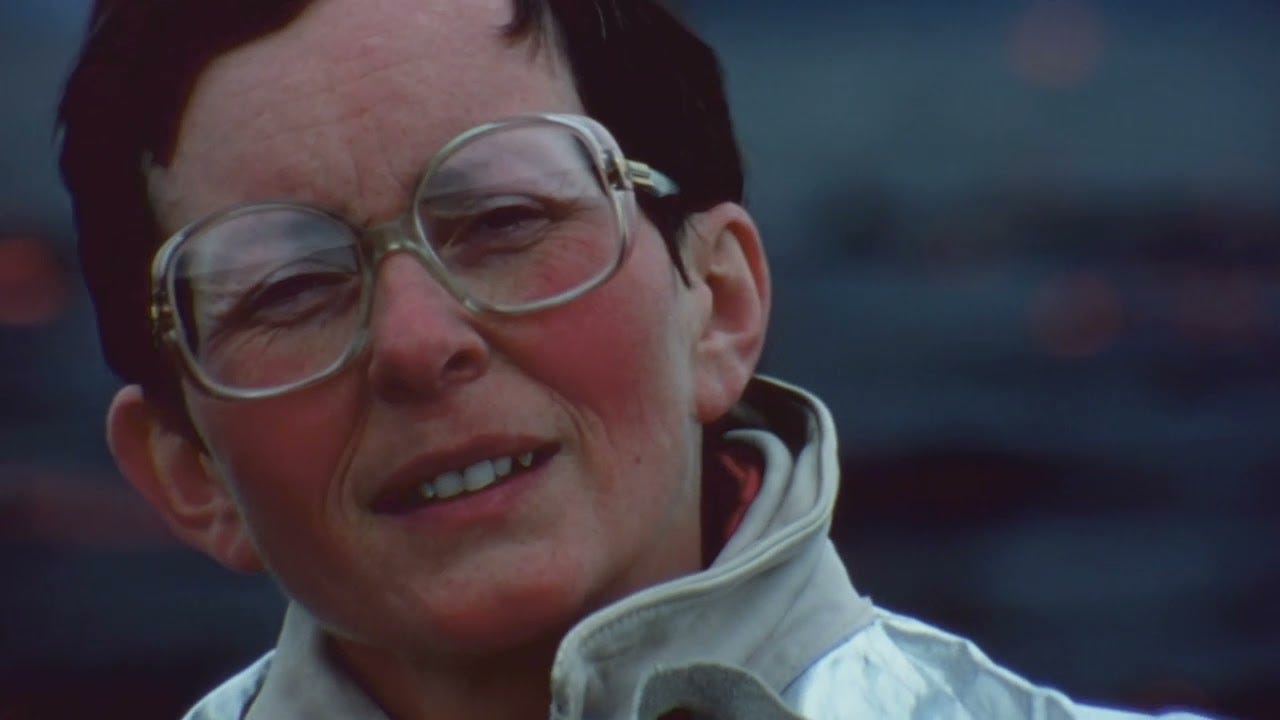
Herzog had the bad luck of having the second documentary about Katia and Maurice Krafft to debut in 2022, following the much better, eventually Oscar-nominated Fire of Love. That film was more biographical and more focused on the romantic aspect of the Kraffts’ story. The Fire Within: A Requiem for Katia and Maurice Krafft is primarily interested in the ultimately tragic daredevil element, almost aligning the titular couple’s demise at the hands of the very thing they passionately studied with Timothy Treadwell’s notorious death at the center of Herzog’s Grizzly Man. This is also kind of a spinoff of Into the Inferno (itself kind of a spinoff of Encounters at the End of the World), which highlighted the Kraffts’ work — and their death — as part of a broader yet more direct and intimate exploration of volcanoes. The Fire Within celebrates and largely consists of the Kraffts’ incredible footage. Herzog narrates a bit too heavily, taking occasional breaks to let the increasingly clichéd Herzogian score by Ernst Reijseger erupt over the archival clips. When Herzog admits that he wishes he could have been the Kraffts’ companion and been there in and as part of their film, he acknowledges why this is more their achievement than his. - CC
34. The Great Ecstasy Of Woodcarver Steiner (1974)
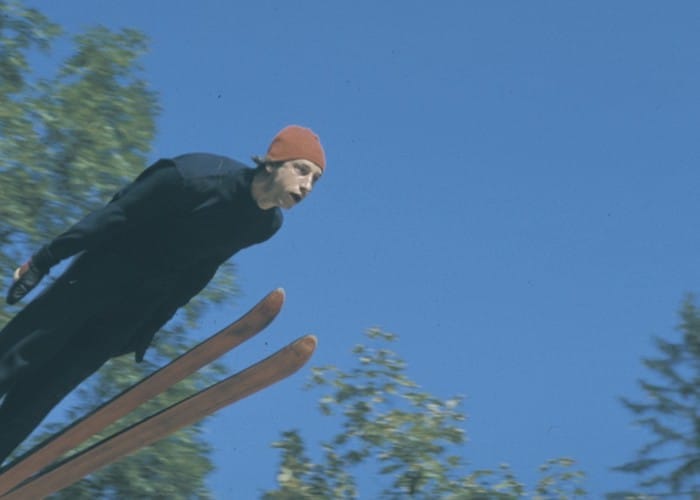
The Great Ecstasy of Woodcarver Steiner is a fascinating entry in the nonfiction filmography of Werner Herzog. It is both wholly Herzogian but also quite commercial— made-for-television, even. The film is focused on Walter Steiner, a trophy-winning ski jumper who just so happens to do carpentry as his full-time job. The footage of the German towns that serve as a backdrop for Steiner and his life is quite picturesque. He is an interesting character, and Herzog studies the man with a sense of reverie. Like Steiner, The Great Ecstasy of Woodcarver Steiner exists in a state of flux — the push and pull between normalcy and ecstasy. - CH
33. Ode To The Dawn Of Man (2011)

Ode to the Dawn of Man serves as a bite-sized companion piece to one of Herzog’s best documentaries, Cave of Forgotten Dreams. This short film focuses on the making of the soundtrack for that feature and how music can give texture and language to a time long past. Personal interviews with the composer Ernst Reijseger and pianist Harmen Fraanje help to highlight the creative process that comes with working with Herzog and such an odd concept. It is nothing short of pure magic. - CH
32. Huie’s Sermon (1981)
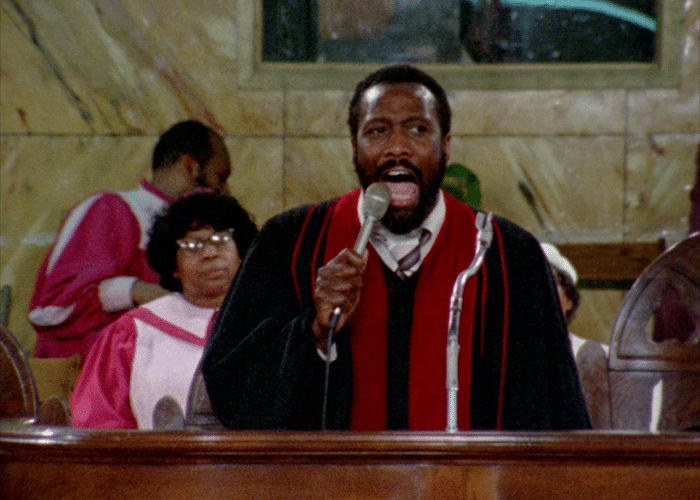
It is hard to classify this film as a documentary because, through its structure, it seems that Herzog set his camera up in a church and just started filming. For a Herzog documentary, it is disorientingly objective. Huie’s Sermon consists of an uncut sermon given by Reverend Huie L. Rogers in a Brooklyn church. Herzog never gives the film a purpose or reason to exist beyond the sermon itself. If anything, it is a genuinely fascinating look at religious fervor and the uncomfortable power of inflection. - CH
31. Fireball: Visitors From Darker Worlds (2020)
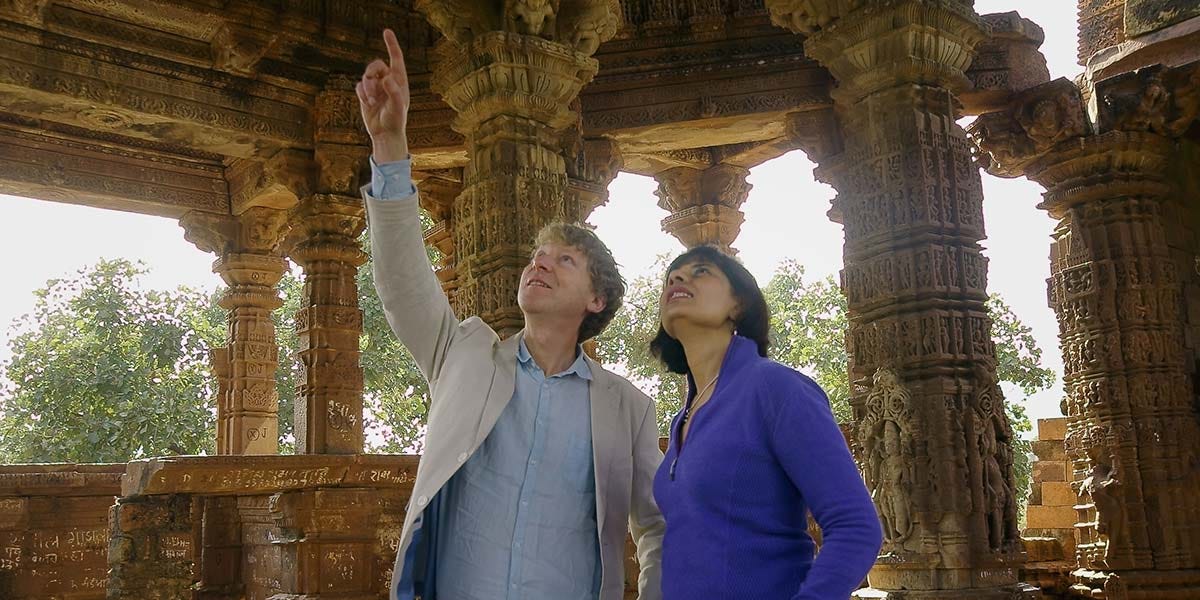
After showcasing the volcanologist in Encounters at the End of the World and Into the Inferno, Herzog teamed up again with Clive Oppenheimer for Fireball: Visitors from Darker Worlds, for which they share directorial credit. The film would seem to have a sci-fi-tinged premise, as it’s about extraterrestrial entities, namely meteorites as large as the one that likely killed the dinosaurs and as small as rocks you could hold in the palm of your hand. It’s well-guided by Herzog and very informative and concentrated, but it’s not as personally philosophical or spiritual as you’d expect from the filmmaker. Even though it’s far from his best, though, it’s still Herzog narrating about space and religion, so it’s still better than most things. - CC
30. Bells From The Deep: Faith And Superstition In Russia (1993)
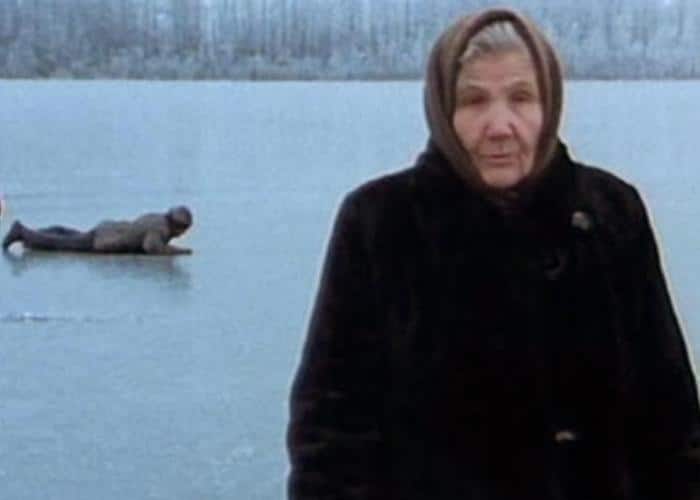
Bells from the Deep: Faith and Superstition in Russia is where Herzog and the practice of mysticism collide. Comprised mainly of interviews and scenes from religious services, the documentary oscillates between being utterly confounding and bizarre. The first half or so focuses mainly on a man who sees himself as the reincarnation of God. His self-appointed name is Vissarion, and he teaches his ways to a devout, near-cult-like group of followers. Later, we are introduced to the story of the lost city of Kitzeh. It is a myth about a city that God, to ensure the town’s safety from Mongol marauders, placed at the bottom of a lake. The hearsay is that one can still hear the city’s church bells, as they ring ominously from the depths. Local pilgrims and priests recount this story with an air of ominous fervor. Devotion has many faces, and in Bells from the Deep, devotion wears the face of a mythmaker. - CH
29. God’s Angry Man (1981)
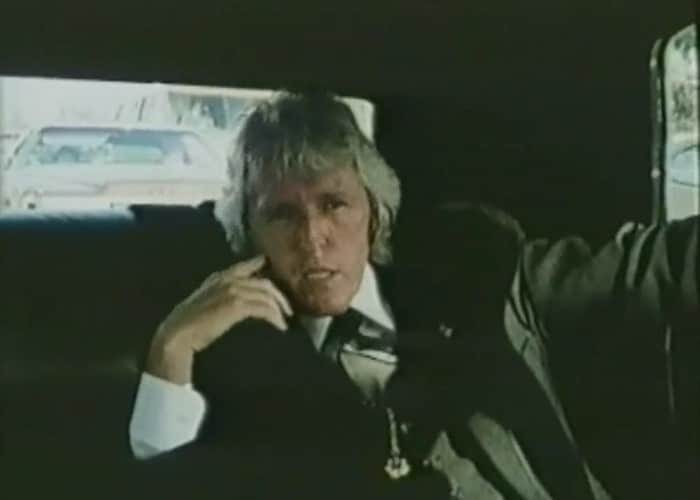
Gene Scott, a televisual pastor, serves as the subject in Herzog’s often uncomfortable look at the intersection between religion and capitalism. God’s Angry Man consists mainly of Herzog’s interviews with Scott and his family. These are fascinating and often infuriating conversations that make obvious the many problems of the “salvation-for-profit” business. Most interestingly, the film also spends a lot of time with Scott and his associates on the set of his television show, Festival of Faith. We see Scott, akin to a snake oil salesman, urge viewers to donate money to his holy cause, and at the film’s peak, we see Scott unleash a tirade of a rant against the F.C.C. The parallels between Scott and the television pastors of today are all too obvious and alarming. - CH
28. Wheel Of Time (2003)

Tibetan Buddhism is a religion deeply concerned with the soul and its essence, much like Herzog’s films. In Wheel of Time, Herzog documents two Kalachakra initiations and interviews the 14th Dalai Lama. The initiations, one of which is interrupted by the Dalai Lama’s health, are sumptuous to watch — beautiful and deeply serious. Wheel of Time is at its most fascinating when Herzog interviews Jigme Zangpo, the longest-serving political prisoner from Tibet. He spent 37 years locked up in China due to his devout and outspoken support of the International Tibet Independence Movement. The words he and Herzog share with one another are reason enough to seek out this wonderful piece of cinema. - CH
27. Pilgrimage (2001)
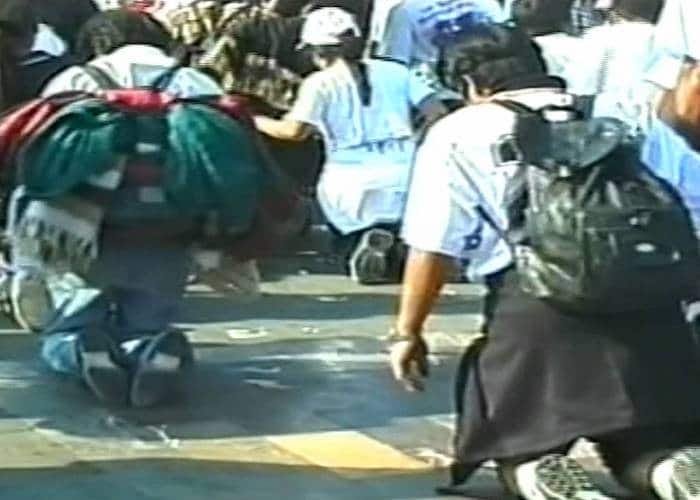
Herzog, always one to embellish, opens this documentary with a quote that Herzog came up with, but he credits it to Thomas à Kempis. Beyond that, Pilgrimage has a tangible feeling of natural, waking life. Shots are only accompanied by music, and the imagery therein fluctuates between pilgrims by the tomb of Saint Sergei in Sergiyev Posad, Russia, and pilgrims who have flocked to the Basilica of Guadalupe in Mexico. As an entire work, Pilgrimage is deceptively simple. What it lacks in urtext, it makes up for in a subtext that is so rich and overflowing with human emotion. - CH
26. From One Second To The Next (2013)

Well, this is a weird one. Like, weird even by the standards of Werner Herzog. In 2013, he teamed up with — you’ll never guess it — AT&T to make a short documentary about the harms of texting and driving. Honestly, it is a rather cut-and-dry work, but I put it somewhat far down this list because, when one watches it, they are filled with mental images of Herzog and some AT&T marketing executives workshopping ideas together. If that doesn’t sell you on From One Second to the Next, then Herzog’s ever-humanist interviews will. - CH
25. Ghost Elephants (2025)
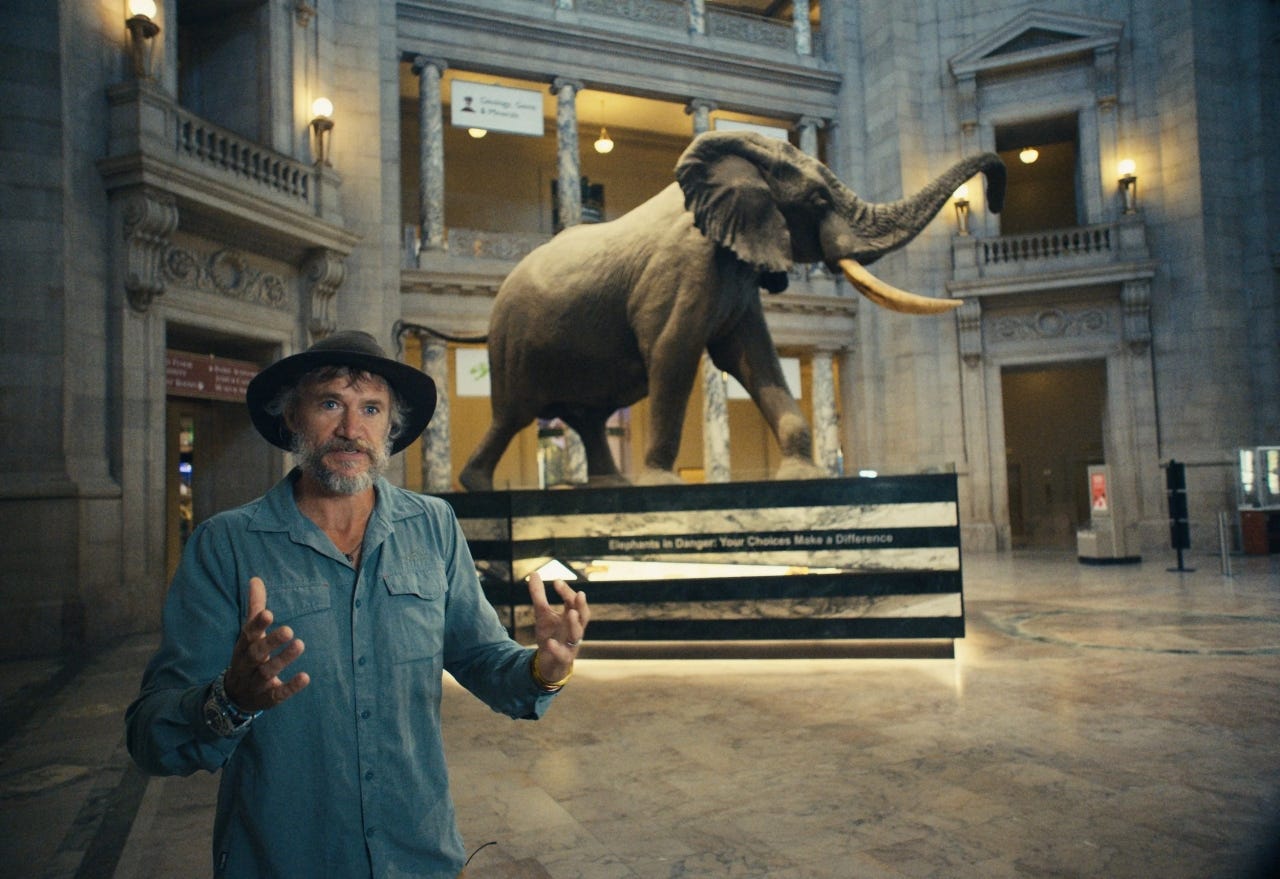
Starring naturalist Steve Boyes and focused on his pursuit of an elusive herd (if not species) of gigantic pachyderms, Ghost Elephants finds Herzog too old to physically accompany his subject on the documented adventure. He’s also at peak contemplation of not his own mortality but the impending demise of all of humanity. The surface narrative is not the clearest, but this film’s thematic storytelling is as deep as anything Herzog has dwelt on. The visual and scientific tri-level contrast between Boyes and the Indigenous tracker companions joining his quest, and Boyes and the lab scientists he encounters later, proves a poignant display of cultural evolutionary distinction, especially in relation to the biological evolutionary distinction of the elephant species being sought. It’s a reminder that Herzog can make any film better by taking the helm. - CC
24. The Dark Glow Of The Mountains (1984)
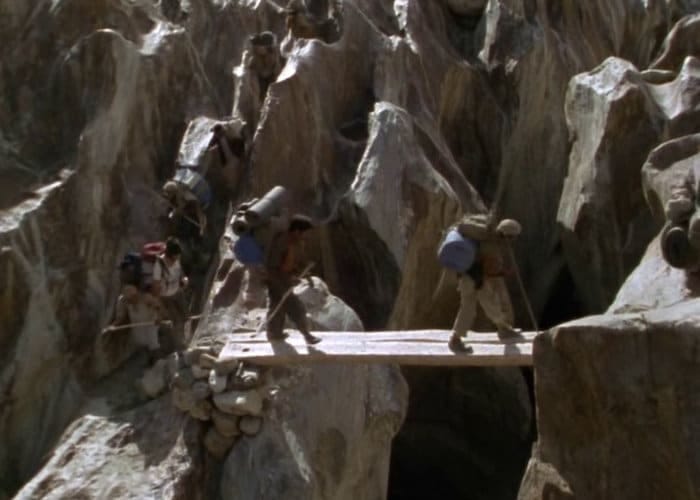
Subverting audience expectations, The Dark Glow of the Mountains is sold as a mountain-climbing documentary when, in fact, it is about the internal motivations and desires of those who seek to risk their lives endeavoring on dangerous mountaineering expeditions. Reinhold Messner and Hans Kammerlander are freestyle mountaineers whose collective goal is to climb two peaks (Gasherbrum 1 and 2) without returning to basecamp. Yet, we rarely see the climb itself. Instead, Herzog peels back the layers of these men and studies them at their metaphysical core. - CH
23. The White Diamond (2004)
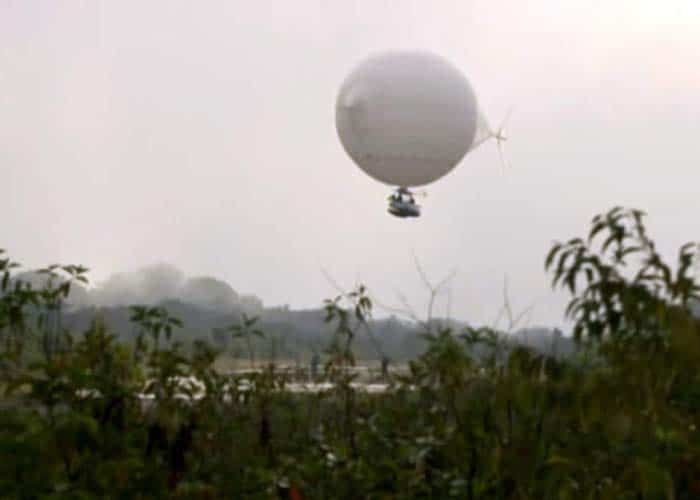
The history of aviation is rife with struggles and eventual triumphs, and Herzog uses a modern-day example of aviation exploration to recount the history of aviation itself. The White Diamond follows an aeronautical engineer named Graham Dorrington, who has designed a white, teardrop-shaped airship that he wants to test out over the forests of Guyana. By focusing on the man behind the airship’s creation, Herzog gets to delve into the struggles of the creative process. Furthermore, Herzog turns his lens from the skies of Guyana to the forest floor, where we see the life of a local diamond farmer named Marc Anthony Yhap. A lot is going on in The White Diamond, and it is a testament to Herzog’s skills as a filmmaker that the film ends up flying rather than crashing to the forest floor. - CH
22. Ten Thousand Years Older (2002)
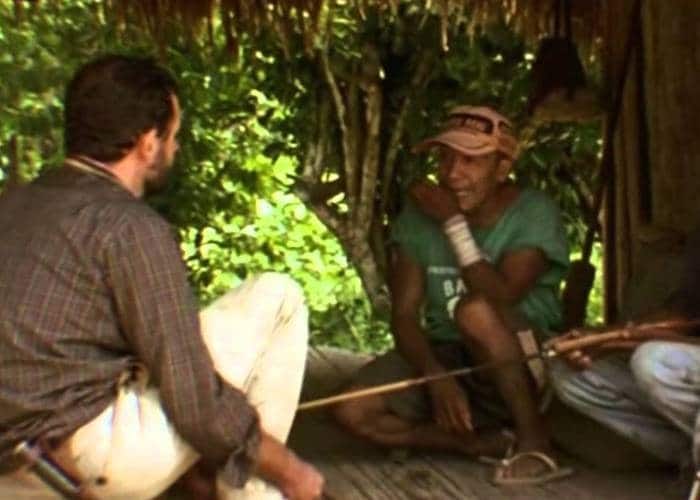
Only Werner Herzog could pack so much thematic density into just 10 minutes. Ten Thousand Years Older is a documentary short that is part of the Ten Minutes Older Project and focuses on the Amondauas people of Brazil. The film begins with archival footage of the Amondauas’s first contact with the modernized world. Before that meeting, they lived a life akin to a “Stone Age existence.” But after being found by the modern world, the majority of the tribe died — most were killed by the common cold and chicken pox. Herzog visits the tribe 20 years after they were initially discovered and speaks to village elders who long for the life before their discovery. Yet, the children are embarrassed by their elders’ adherence to old ways and overall reluctance to modernize. It is gut-wrenching stuff that Herzog handles with a grace that stands in stark contrast to his immensely serious and emotionally distant voice. - CH
21. Jag Mandir (1991)
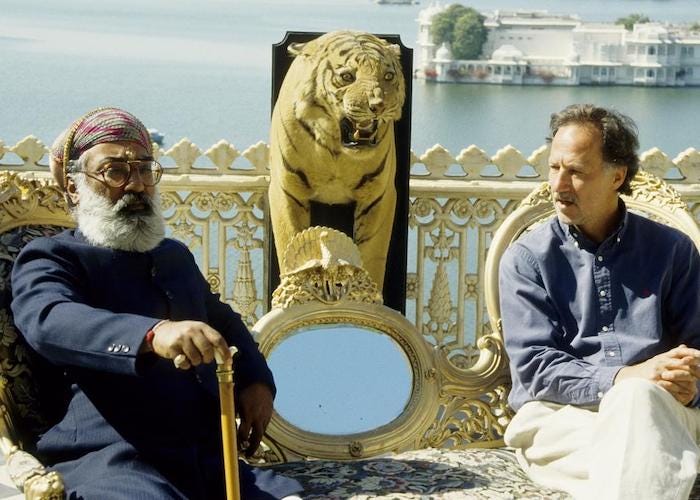
A lot of Werner Herzog’s films have a subtext that is concerned with performance, or what it means to be performative in a documentary sense. Jag Mandir is wholly concerned with performance and the many aspects that make up theatre, on both a large and small scale. The majority of the film is focused on a bombastic theatrical performance, helmed by André Heller, for the Maharana Arvind Singh Mewar at the City Palace in Rajasthan. Two thousand performers take part in an elaborate theatrical performance that spans many hours in a single day, and Herzog’s documentary splits up a lot of this with rehearsals that took place over several days before the stage performance. It is colorfully bombastic and texturally rich. - CH
20. La Bohème (2009)

Commissioned for Sky Arts and the English Opera, La Bohème is a four-minute documentary that focuses on the harsh realities of life in Ethiopia. The confrontational imagery is set to the operatic duet “O soave fanciulla” from the opera La Bohème. It is a deeply expressionistic work that showcases Herzog’s documentary form stripped down to its very essence. It captures a specific feeling of a harsh place that is often neglected by the Western world. - CH
19. Happy People: A Year In The Taiga (2010)
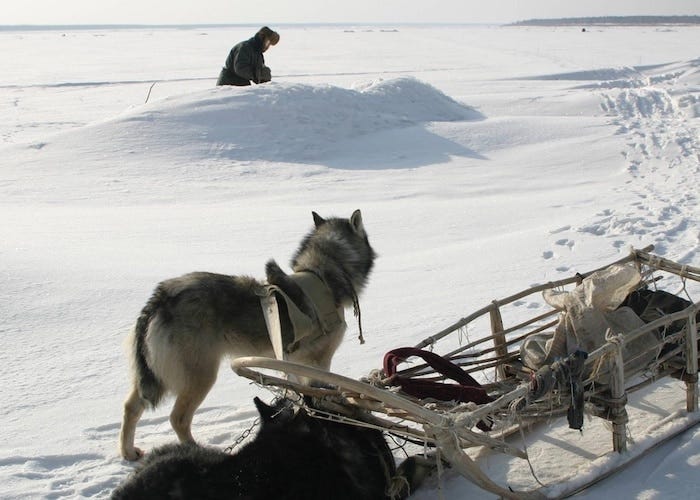
Sharing directorial duties with Dmitry Vasyukov, in Happy People: A Year in the Taiga, Herzog showcases the life of people in the village of Bakhtia beside the Yenisei River in the Siberian taiga. Harsh, desolate, and existential — this is Herzog where he is most comfortable (and relatable). It focuses on many fur trappers and hunters, as well as the life of the native Ket people. Herzog’s voiceovers are poetic, and he tries to unpack the specific form of the human experience that could keep people happy and content at the farthest reaches of the habitable world. Ever the humanist, Herzog finds his answer among many other answers, as everyone shown in the film has a different idea of what it means to live in the Siberian taiga. - CH
18. The Transformation Of The World Into Music (1994)
Opera is an often daunting form of art — it is at times confusing, and one often needs a bevy of external knowledge to understand and enjoy the insular world of the artform. But Herzog’s The Transformation of the World into Music invites all types of viewers into the fascinating world of opera. Focused on bringing the operas and music of Richard Wagner to life, this film shows all of the behind-the-scenes machinations that go into staging an opera specifically for the Bayreuth Festival. Herzog focuses on every aspect of opera, from specific music sheets to the finding of the right performers. Furthermore, he does not shy away from the complicated history of Wagner, one of Germany’s most well-known composers. His ties to Nazism and Adolf Hitler are broached and confronted in both a humanistic and damning way. Wagner’s legacy is eternally tarnished, but Herzog argues that his music rises above such controversies. Yet, he also leaves it to the viewer to come to their own conclusions on such a touchy matter. - CH
17. Gesualdo: Death For Five Voices (1995)
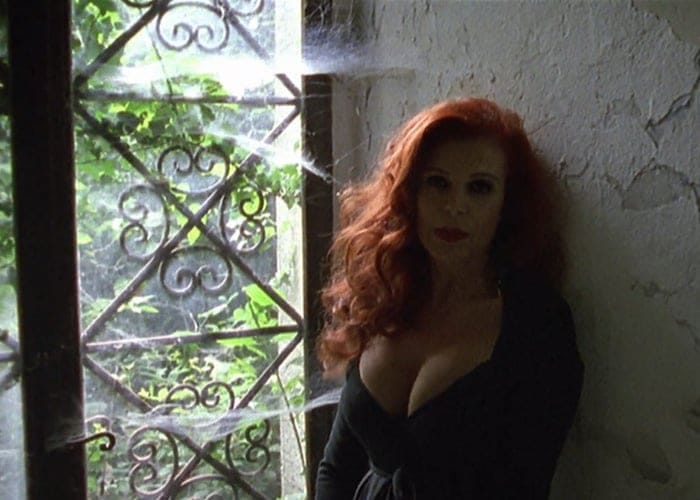
Werner Herzog’s stoic face may lead one to believe that his heart is as cold as ice, but if one watches any of his works, then they will come to the inevitable conclusion that Mr. Herzog’s heart is as big as a mountain. That is why it is surprising that he calls Gesualdo: Death for Five Voices “one of the films closest to my heart.” He focuses on the music and life of Carlo Gesualdo, a musician with an endlessly fascinating and unsettling life story. Intercut with scenes of Gesualdo’s madrigals being performed, Herzog’s camera studies Gesualdo’s supposedly cursed castle, the legends of his personality, and the eventual murder of his wife and her lover by his very hand. This is undoubtedly one of Herzog’s oddest documentaries in that a surprising amount of it is staged, which subverts the very idea of what it means to document reality. One of the most memorable segments sees Herzog walking through Gesualdo’s castle and coming upon a man who plays music into the castle’s cracked walls in order to keep the demons therein at bay. - CH
16. Wings Of Hope (1998)
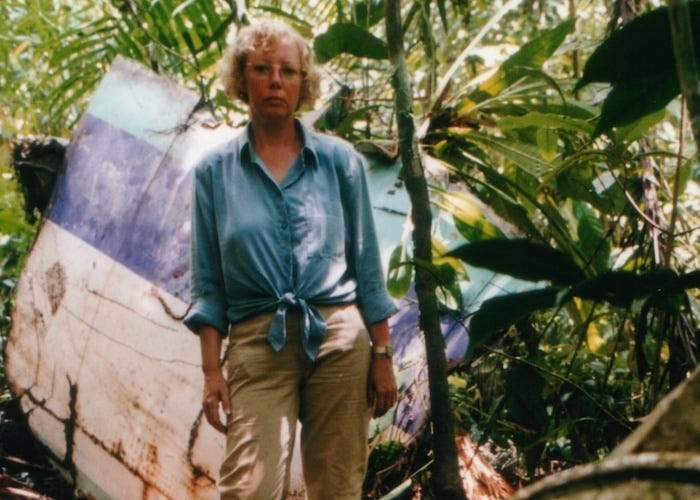
Julian Koepcke is a German-Peruvian woman who happens to be the sole survivor of the fated LANSA Flight 508. Herzog’s Wings of Hope explores her story and recounts the crash and her escape from the jungle. He has a deeply personal connection to Flight 508, as he almost took the flight when getting ready to location scout for Aguirre, the Wrath of God. His flight ticket was canceled at the last minute due to an eternally lucky scheduling error. Herzog and Koepcke fly from Lima to Pucallpa, and they sit in the same seats she was in when her flight crashed. Later, they visit the crash site in the jungle and unearth fragments of the plane, and they then trace the path of her escape from the jungle along specific river routes. Herzog has a sixth sense that allows him to unearth the deepest, most complicated emotions of individuals who have suffered not of their own accord. Better yet, he knows how to handle these emotions in a confrontational manner that is both uncomfortable and somehow deeply moving. - CH
