

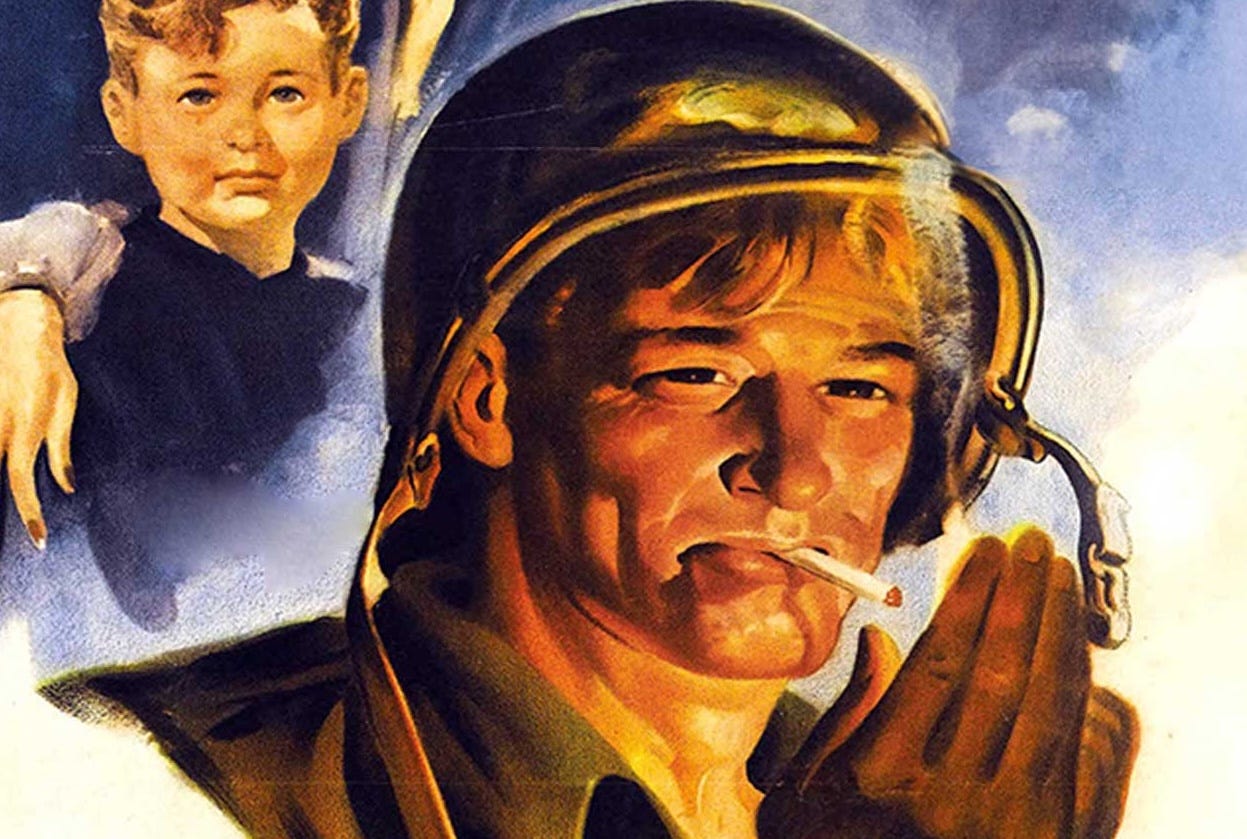
Don Siegel, the Hollywood journeyman director best known for helming Dirty Harry and the original Invasion of the Body Snatchers, never won an Oscar. He technically was never even nominated. Yet he began his directorial career with two short films that won Academy Awards in 1946. Warner Bros. staff producer Gordon Hollingshead received credit for the honors, which went to Siegel’s directorial debut, the drama Star in the Night, for Best Short Subject (Two-Reel), and to Hitler Lives, for Best Documentary (Short Subject). Hollingshead was also nominated that year for Best Short Subject (One-Reel) for the documentary Story of a Dog, which did not win.
Hitler Lives was certainly the easier production of the two for Siegel and Hollingshead, as it’s a slight reworking of a short documentary that already existed called Your Job in Germany. Written by Theodor “Dr. Seuss” Geisel and directed by Frank Capra, the original version was made for the United States War Department, for military eyes only. Warner Bros. acquired the rights to release the film to the public but had to give it a new name and change the narration and music (RKO did the same thing with Geisel and Capra’s Our Job in Japan for the Oscar-winning feature Design for Death, which I’ll write about in a future column). The studio also added a few new sequences.
The initial film’s purpose was to train soldiers heading to Allied-occupied Germany. Reminding viewers that the country’s leaders had already attempted grand imperial conquests in Europe three times over the last century, the documentary warned that a Fourth Reich could be around the corner. Americans sent to Germany were urged not to trust, let alone befriend, its citizens because they’re all a “potential source of trouble.” Youth were especially suspect due to the assumption that they were all brainwashed their whole lives by Nazi propaganda. But in general, it was thought safer for the U.S. to be cautious of all, disbelieving that a nation’s worth of people could suddenly change their allegiance after defeat, especially given Germany’s history.
While the whole film feels uncomfortably xenophobic and presumptuously fear-mongering, at that time it was probably effective in defending the occupation, particularly if it were meant to sell the idea of a longer stay than the one after World War I. Geisel and Capra argue that we were duped into thinking, “Why, these people are okay! It was just that Kaiser we had to get rid of.” Hollingshead and Siegel, with writer Saul Elkins, kept that line along with admitted recognition of Germany’s cultural supremacy, and then this segment: “We bit. We poured in our sympathy. We pulled out our armies. And they flung Chapter 3 in our faces.” The publicly sanctioned version removes a subsequent expletive but retains the sentiment of deja vu and a tease of a Chapter 4. “It can happen again,” the films suggest. Hitler Lives adds, “The voices of millions of dead cry out, ‘This time we must not have died in vain. This time Germany must not rise again.’”
