

Only a few documentaries that premiered at the 2001 Sundance Film Festival are considered classics today, including Dogtown and Z Boys and Southern Comfort. Yet, so many more are worth revisiting, especially as snapshots of and time capsules from a quarter of a century ago, such as Startup.com, Scratch, and Chain Camera. Most are also deserving of updates, whether for their characters’ lives, the issues the films raised, or their significance to broader documentary history and their directors’ filmographies. LaLee’s Kin: The Legacy of Cotton is one of those cases. It’s not particularly well-known, even among fans of filmmaker Albert Maysles, despite it being his only Oscar-nominated feature (it’s worth noting that the Academy did not credit him on the nomination). However, it does have a curious legacy compared to that of one of his — and documentary cinema’s — most famous works.
In the 1990s, HBO commissioned Maysles Films to make a documentary on poverty in America, which the production company had previously done for PBS in 1978 with The Burk Family of Georgia. This time, they would travel to Mississippi, to one of the state’s poorest counties. The result, LaLees’s Kin, would be their third documentary for the cable channel in a decade, during an era when Albert Maysles seemed to be more interested in issue-focused films than when his brother was alive and working alongside him. For this one, Maysles was also the cinematographer (for which he won an award at Sundance), and his fellow directors were longtime collaborators Susan Froemke, who also produced, and Deborah Dickson, who was also the editor.
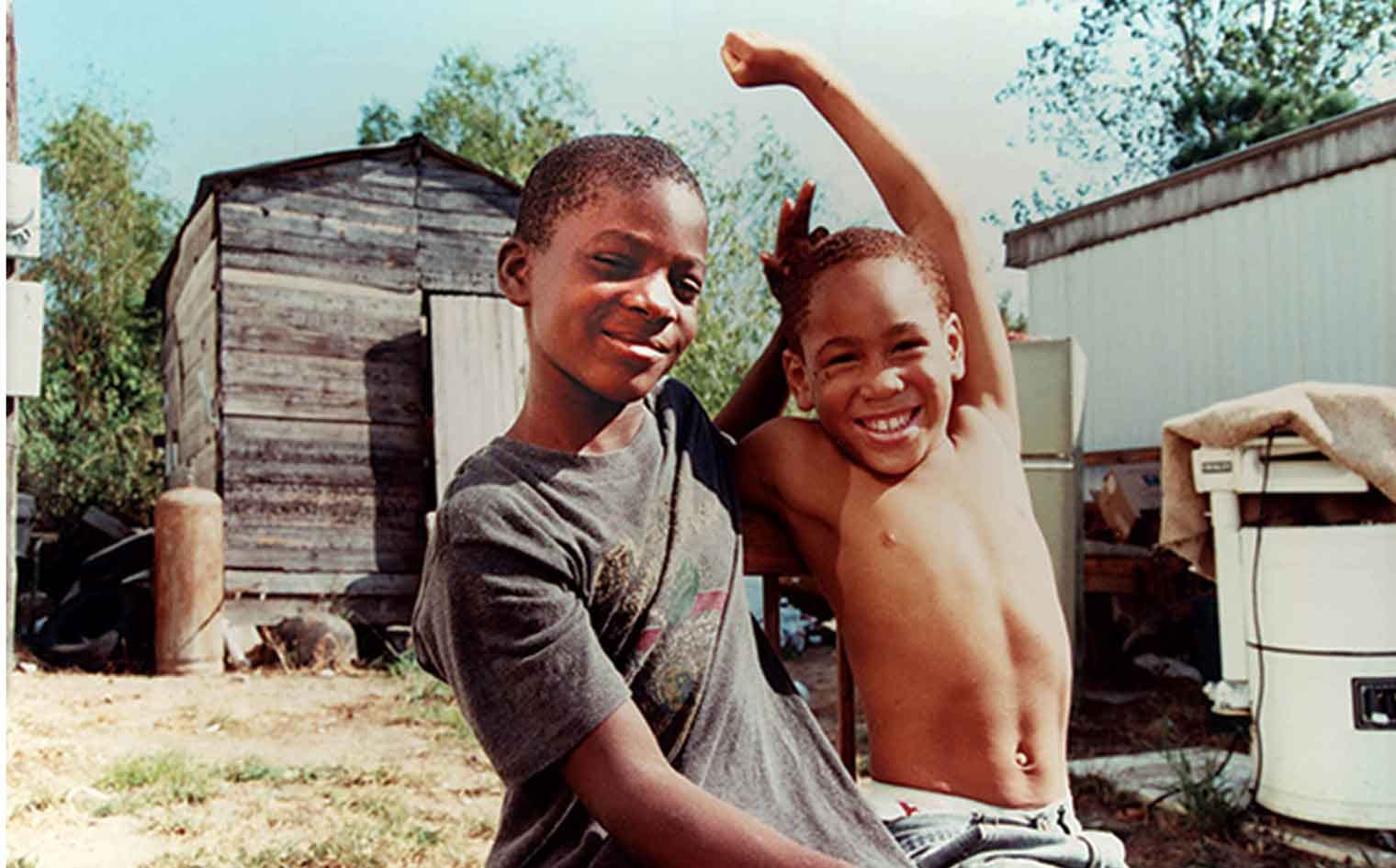
The documentary focuses on two characters in Tallahatchie County. One is the eponymous Laura Lee “LaLee” Wallace, an illiterate 60-year-old former cotton worker (a job she started at six years old) living on disability in a government-provided trailer infested with cockroaches and lacking running water. She also cares for a handful of her grandchildren and great-grandchildren whose parents couldn’t raise the kids themselves. The other character is Reggie Barnes, the superintendent of the West Tallahatchie school district, which is on probation for having unacceptable academic scores. LaLee is the more significant of the two, hence the film being named for her, and at first the two stories seem too disconnected, but they’re tied together by cyclical and paradoxical problems concerning poor Black families in the South.
More than 130 years after the abolishment of slavery in the U.S., families like the Wallaces still felt the effects of such subjugation. Generations of Black Mississippians had continued to work the cotton fields, even as children, which impeded their education and financial growth. With so many held back from progressing socially and culturally due to low incomes, child labor, the restrictions of the sharecropping system, Jim Crow laws, and additional bad family situations like absent fathers, the problems persisted. The schools had more of a catch-22 issue where kids were too poor and burdened to succeed in their studies — LaLee couldn’t even afford paper and pencils for her kin, some of whom were also too busy helping with their younger siblings and cousins to get homework done — but the failures of the students kept the schools from becoming more successful, meaning few of these kids would advance in their education and opportunites to escape from poverty.
The film ultimately hints that improvement is possible, as the school district raises its test scores and gets off probation. One of LaLee’s grandchildren does well enough in her studies that she seems to be on the road toward a college education, though some of this has to do with her moving away from Tallahatchee to live with other relatives. Unfortunately, if we look at the characters and their stories beyond what’s in the documentary, the hopefulness of its conclusions is decimated. LaLee garnered enough notoriety from the film that her life was regularly revisited by local media, and these updates revealed that little changed for her afterward. Sadly, she had a stroke a few years following the documentary’s release and then passed away within a decade.
In an interview conducted in 2004, Maysles shared that the girl with academic promise (known as “Granny” in LaLee’s Kin) had become pregnant, which didn’t have to mean her fate was altered, but that was implied. Even the West Tallahatchie school district has been on probation again, and is now still just barely meeting standards to maintain accreditation. Poverty remains an issue for Mississippians, especially for Black residents and particularly for children. On the brighter side, the grandchild nicknamed “Redman” was revisited in news stories reporting that he did learn to read. He also grew up to become a sheriff. Thanks to the documentary being available for free on YouTube (it is otherwise officially available on DVD), LaLee’s Kin has cultivated a fanbase, and thanks to social media, those followers can keep up with the lives of Granny, Redman, and others from the film online.
What is expected of a documentary like LaLee’s Kin provides another problem. HBO’s reason for commissioning the film was surely out of concern, with the desire to create awareness that would lead to positive change. LaLee did reportedly benefit to a minimal degree, as a community effort managed to finally get her running water in her home. Outside of that, no substantial progress is evident as a direct result of the documentary shedding light on its issues. If anything, the longer that its legacy is one of apparent deficiency regarding the intended goal of being helpful, the greater the issues loom. Retrospectively, LaLee’s Kin now just looks like “poverty porn,” with its images of one family’s life in squalor and little boys bathing in buckets. However, viewed contextually for the present and going forward, it’s increasingly more damning.
