

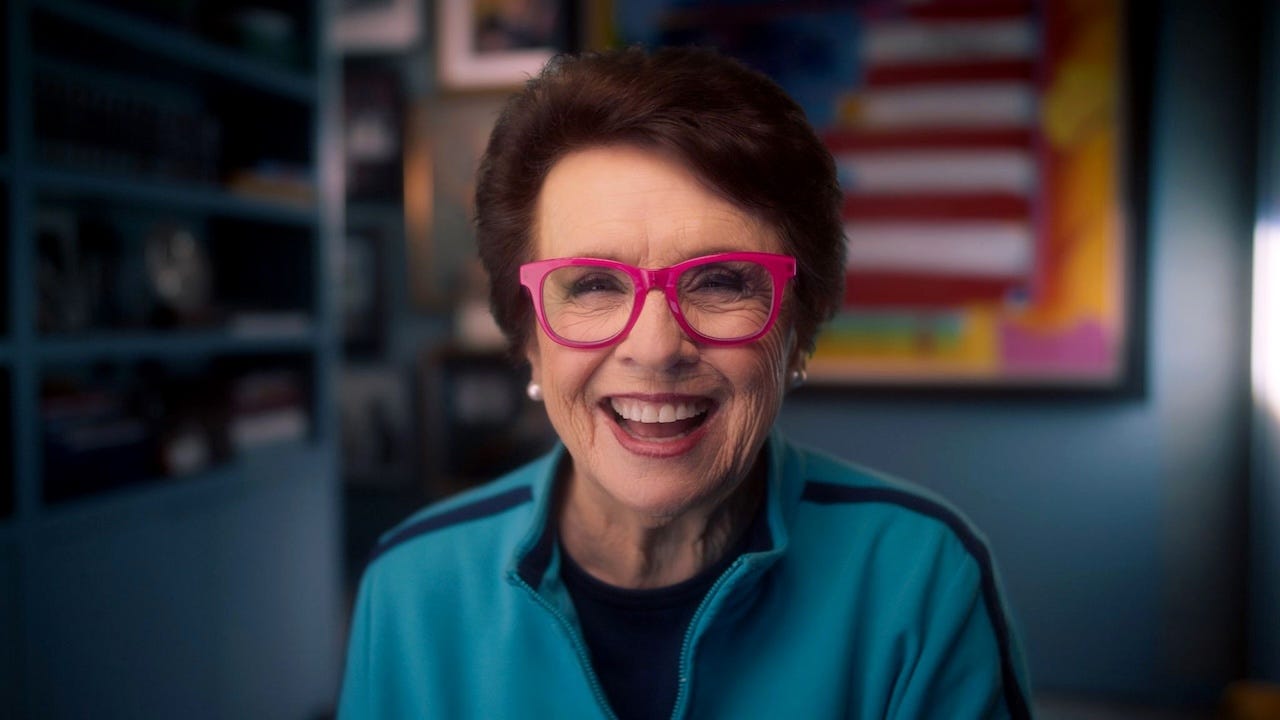
There were times when I felt like I had seen Liz Garbus and Elizabeth Wolff’s Give Me the Ball! before. It’s a conventional biographical documentary about Billie Jean King, albeit one where the subject seems to be at the wheel, given the way she is filmed in close-up, talking directly through the screen and telling her story rather than being interviewed. One extensively addressed part of her story is certainly familiar to viewers today thanks to the dramatic depiction of the 1973 “Battle of the Sexes” match between King and Bobby Riggs in a 2017 biopic.
The documentary also especially recalls last year’s Sally, partly because its subject, tennis legend Billie Jean King, was also in that film, and partly because it’s another tale of a Queer person who became famous at a time when being gay or bi, especially as a prominent figure idolized by children, was something to hide. What works differently and somewhat in its favor, while also less sad, is that, unlike Sally Ride, King is still alive and can talk about her life and identity on screen. King was also outed when she was at the peak of her celebrity, so we see exactly why it was unfortunately necessary for such figures to remain closeted then. But part of the need for this film is that King is more than just the lesbian tennis player.
Garbus and Wolff do something with Give Me the Ball! that breaks from the celebrity biography norm: they hold the applause to the end. They tell King’s story (with King doing most of the telling), and then, at the end, they bring in the complimentary guests spouting praise and discussing the subject’s importance. This plays more like a concluding epilogue, explaining that this whole story has led to this and to these people, mainly younger women tennis players, such as Serena Williams, who have benefited so much from how King changed her sport and women’s athletics in general, especially when it comes to widespread respect and financial compensation.
A version of this review of Give Me the Ball! was originally published on February 2, 2026, as part of our Sundance Film Festival coverage.