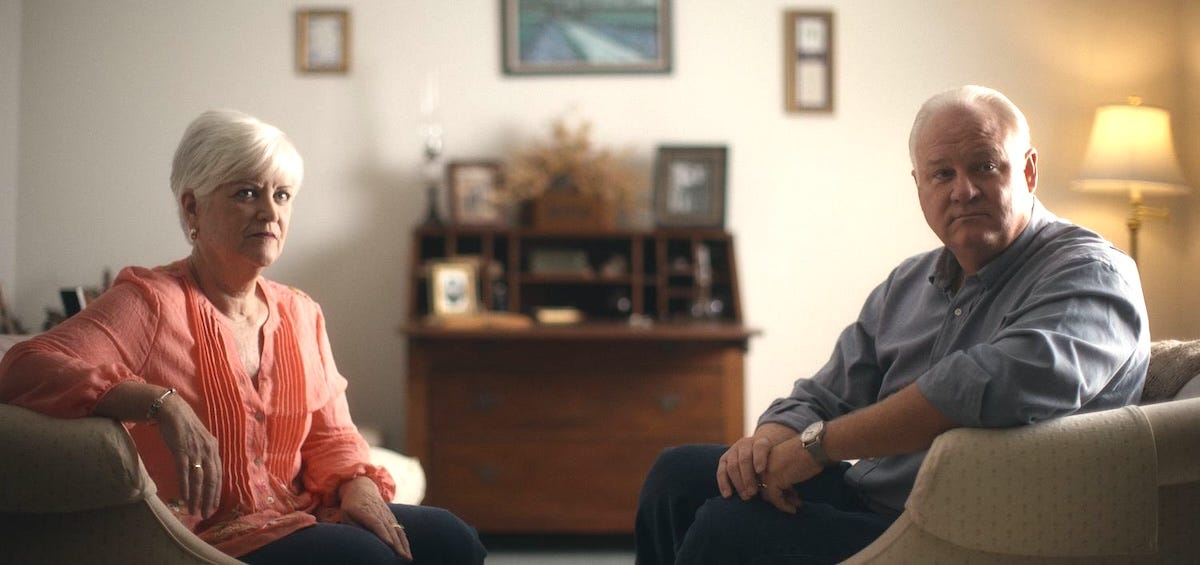
Coming up with original or unused titles must be one of the hardest parts of making a true-crime documentary. A Killer Story sounds a lot more generic than this three-part series really is, but it’s difficult to sum up the documentary in just a handful of words. The gist is that it centers around a double-homicide case in which a woman is accused of murdering her ex-husband and his girlfriend. On top of that, it follows a couple with no direct connection to the case who are obsessed with proving the woman’s innocence. It’s driven by an investigative reporter from The New York Times who also became hooked by the mystery and bewildered by the twists uncovered throughout the six-year filming of the documentary.
The first of the three episodes introduces all the characters. The reporter, Joe Sexton, is our narrating guide, and he curses like he can’t control it. He’s a great f’in stand-in for the viewer’s own curiosity and inquiry. The couple, Eileen and Keen, seem to be a folksy pair who love true crime, making them initially quite relatable to the audience. Then there’s the alleged killer, Dana Chandler, who is never a direct participant in the series and therefore not easily judged through the documentary itself. A Killer Story begins with an apparent desire to be some profoundly immersive work of creative nonfiction à la In Cold Blood, with the Kansas setting to boot. The middle episode, however, goes through the typical motions of a documented trial, and the finale loses some of its steam, though that feeling befits the way the story runs its course.
A Killer Story is admittedly one of the more addictive true-crime miniseries I’ve seen in a while. It’s structured perfectly to engage and captivate, and its first two parts end on cliffhangers that are satisfyingly dealt with quickly in the following installment. The series maintains and leaves us with several pressing questions about the case while also implicitly examining issues with the justice system (this story involves multiple, disparate trials, which is fascinating) and the motivations of true-crime enthusiasts and citizen sleuths who influence proceedings. The star of the documentary isn’t the case, though. It’s Sexton, who also gets the last word on everything we’ve been shown inside and outside the trial. I wouldn’t be surprised if he got his own show after this.


